
Shopping Cart


- New
Every piece of BMX protective gear a racer needs, in one catalogue: approved full-face helmets, full-finger gloves, back protectors, elbow pads, knee pads and race shoes. Sizes from Micro to Pro, junior and adult fits, from Kenny, Shot, Fly Racing, Fuse, Answer, Chase and Stay Strong. Sizing advice from riders.


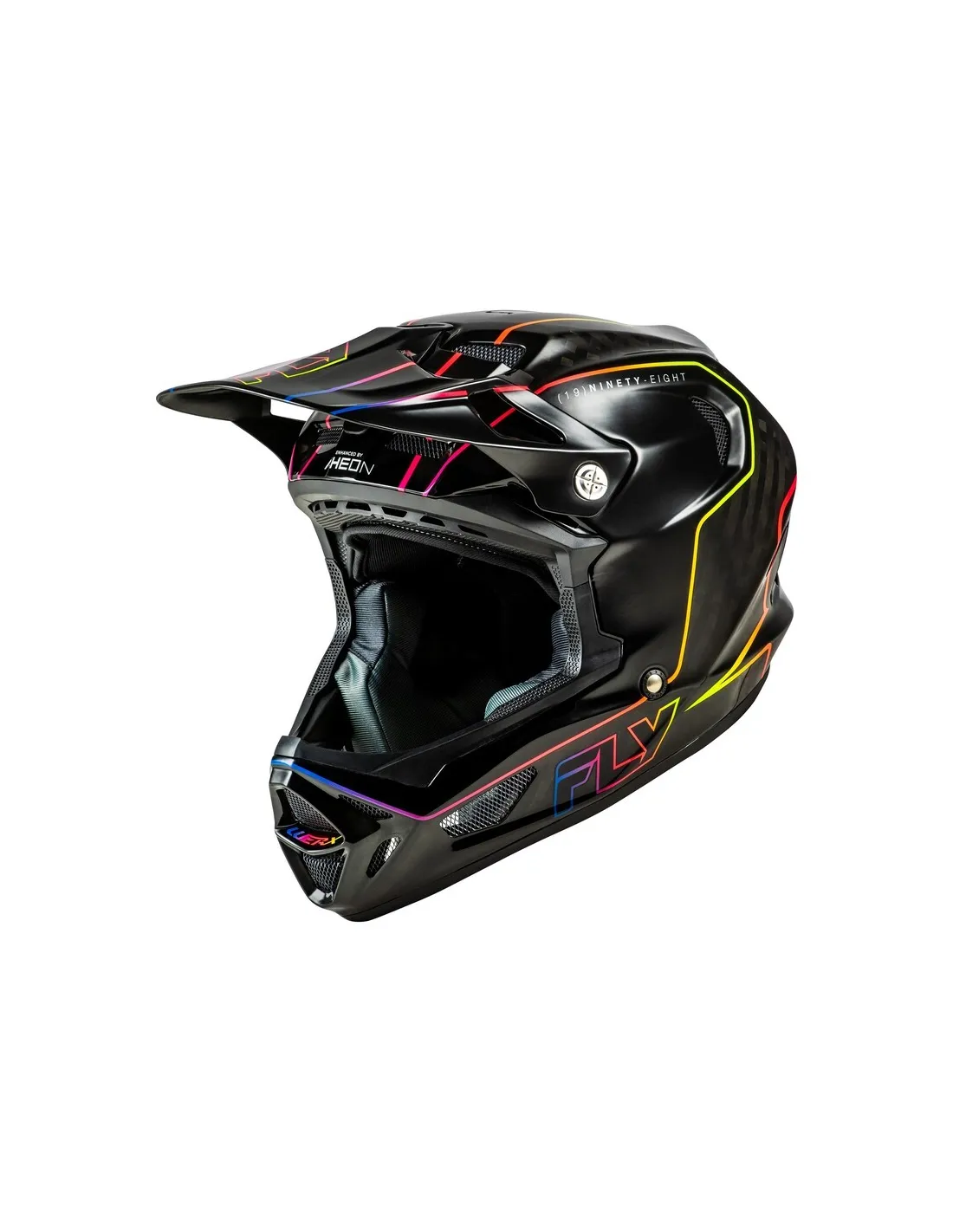
BMX racing is run on a dirt track with a start gate, jumps and berms, so kit is never optional. UCI and national federation rules require five items, not four: a full-face helmet with a fixed chin bar, a peak at least 10 cm long on that helmet (rule 6.1.081), a long-sleeve jersey, long race pants and gloves covering every finger, in motos and supervised training alike. The rest — back protector, elbow pads, knee pads, rigid shoulder protectors, cervical protection — is the rider's own call and is exactly what the UCI recommends in that same rule; it is strongly advised from Micro to Expert.
An open-face mountain bike lid will not do: the chin bar protects the face in a crash out of the gate or on a short landing. Models sold in Europe carry EN 1078 (CE marking), often alongside the American CPSC 1203 standard — two texts that certify the shell but include no chin bar test. For face protection, look additionally for ASTM F2032, the BMX-specific standard, or ASTM F1952, the downhill mountain bike benchmark. Check the peak as well: the UCI requires 10 cm as a minimum. Shot, Kenny, Fly Racing and Answer models are in our BMX full-face helmets.
Long sleeves and covered legs limit dirt burns. Race BMX jerseys are cut close to the body so nothing catches on the bars, BMX race pants are reinforced at the knee, and full-finger gloves keep the feel you need on the brake lever.
Two sets of standards coexist and they are worth telling apart. EN 14120 covers protective clothing for roller sports: it is the cycling-side benchmark, the one behind soft sleeves. EN 1621-1 (level 1 or level 2, depending on the residual force transmitted in the impact test) and EN 1621-2 for back protectors, in full back (FB) or central back (CB) coverage, are motorcycling standards, widely used by gravity brands but not the regulatory benchmark for cycling. Level 2 absorbs more but stays thicker: over a 35-second moto, plenty of riders prefer a well-vented level 1, such as the Fuse or Kenny models.
In the Micro and Mini categories, an oversized protector slides out of place and guards nothing: a size that fits now, renewed each season, is the better call. Do not overlook grippy-soled shoes either, which stop the foot coming off the pedal on the first stroke.
As a multi-brand shop, BMX RACING compares cuts, CE levels and size charts from one brand to the next instead of defending a single catalogue. Unsure about a shoe size or a fit? Our team answers. Dispatched within 24 to 72 hours and you can spread the cost over 2 or 3 payments.
Kitting a rider out for a first season? Our guide to starting BMX racing runs through the compulsory kit item by item, and what to add beyond it.
A full-face helmet is mandatory. Depending on level, add gloves, a back protector, knee and elbow pads and reinforced trousers to protect you in a crash at the gate or on landings.
A full-face helmet and gloves are required in training as well as racing. Other protection (back protector, knee pads) is strongly recommended, especially for young riders.
Yes: shipping is free within mainland France from €99 of purchase. Below that, the cost is shown at checkout according to weight and the chosen shipping method.
Absolutely. You can pay for your purchases in 2 or 3 instalments with Alma, completely securely. The option appears automatically at checkout.
You have 14 days after delivery to change your mind. The item must be new, unfitted and in its original packaging to be returned or exchanged.
Yes, we also ship to the French overseas territories (DOM-TOM). Times and costs depend on the destination and parcel weight; the exact amount is calculated and shown before you confirm your order.