
Shopping Cart
- BMX racing or BMX freestyle: not the same sport
- What is a BMX track?
- How does BMX racing work, from gate to main event
- What age to start, and on which bike
- Finding a BMX club and getting a racing licence
- BMX racing equipment: what the rules require
- What a BMX costs, part by part
- What we fix most often on first-year bikes
- Your first sessions, in the right order
- Where to start, concretely
- Frequently asked questions
BMX racing or BMX freestyle: not the same sport
One question has to be settled before you spend anything. Race or freestyle. The two bikes share almost nothing, not even the way they are used.
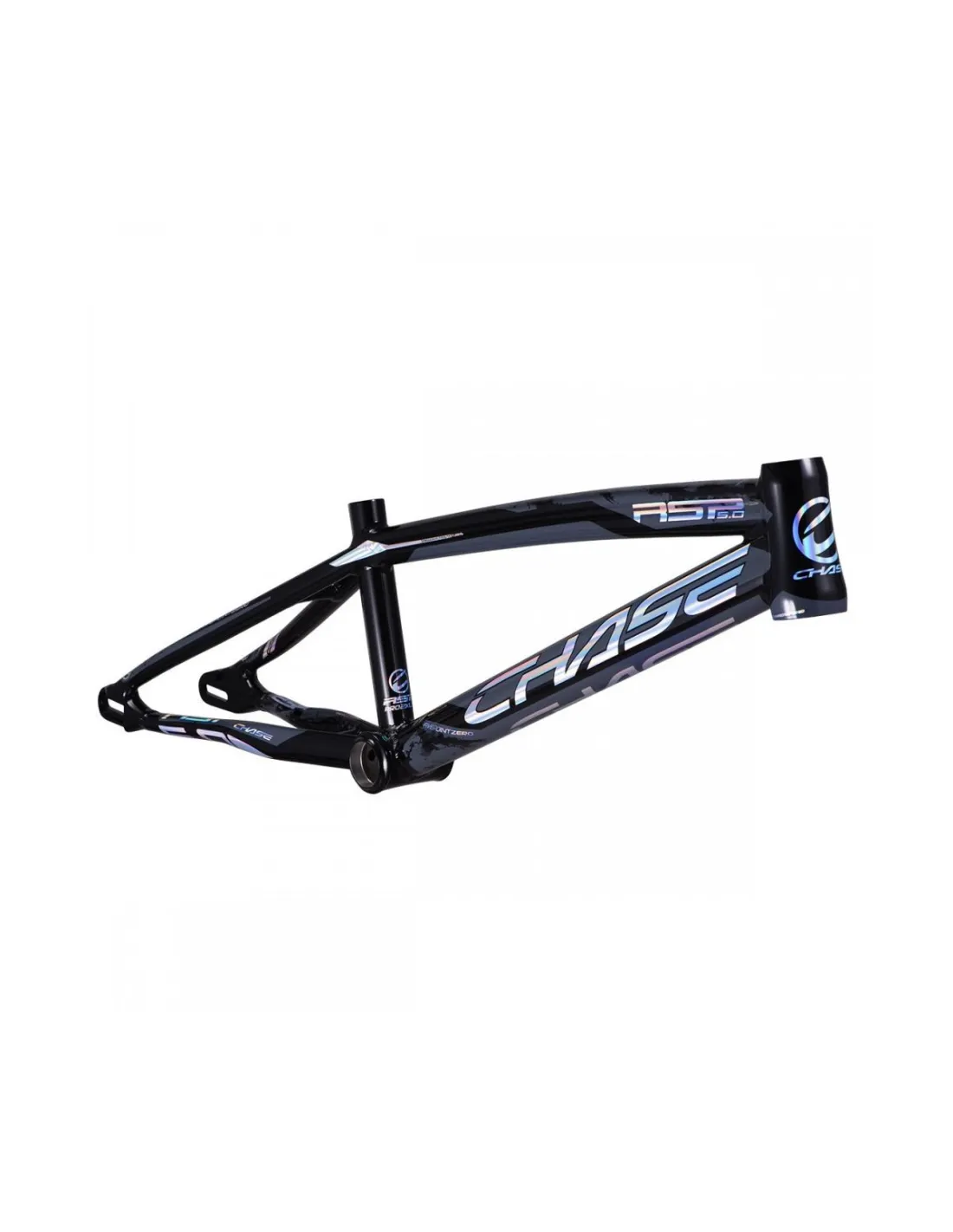
BMX racing is a sprint discipline, and an Olympic one, contested on a closed dirt track with a start gate, jump-filled straights and berms — turns whose surface banks up like a bowl, so you can carry full speed through them without sliding. The bike is light. Long frame, a single rear brake, wide bars, a high thin saddle, one gear. It is built to accelerate.
BMX freestyle — street, park, flat — is a trick discipline. The bike is shorter and heavier, with pegs and high bars. It survives landings but does not accelerate, and it will not be allowed into a moto. A supermarket or big-box BMX will not do the job either, not even to try the sport out. Ask the club whether they have loan bikes instead.
What is a BMX track?
A BMX track is a closed dirt circuit of about 300 to 400 metres, ridden one lap at a time by eight riders. It starts with a raised start hill and a drop-down gate, then strings together three or four jump straights separated by banked turns called berms.
The start hill stands about 5 metres above ground level on a standard track, and up to 8 metres on the supercross tracks reserved for elite racing. Ask the club how high their hill is before the first session, because that is the number that impresses a beginner most. Surfaces vary from packed clay to asphalt on the hill and in the turns, and the whole lap is one-way and one-way only.
How does BMX racing work, from gate to main event
The start hill and the gate
At the top of the hill, a maximum of eight riders line up side by side in eight lanes, front wheel resting against a raised metal gate. Riders stand on the pedals, balanced, front foot up and loaded. The starter calls "OK riders, random start", the cadence runs down through the lights, and the gate drops. Getting out of the gate is the most practised skill in BMX racing, and the slowest to acquire.
One lap of the track
Off the start hill, the first straight strings together jumps of different shapes. Doubles are two jumps cleared in one go, tabletops have a flat top and are far more forgiving, and rollers are a run of small close-set bumps you absorb rather than jump. Strung together and ridden in sequence, they make up the rhythm sections. Then comes a berm, followed by two or three more straights separated by berms. The rider pedals, absorbs and gets straight back on the power: nothing wasted, and no gears to change.
Motos, knockout rounds and real riding time
A race day is decided over qualifying motos — usually three — with the finishing positions added up. The best-placed riders go through to the quarter-finals, the semi-finals and then the main event. So a rider races four or five times in a day, but each run lasts around 35 seconds. A full day of racing adds up to under three minutes on the bike, and the whole job is being ready for those three minutes.
Race classes
Race classes are not frame sizes, even where the words look identical. Under UCI rules a class is set by the age you reach during the calendar year, and "Junior" in that rule book means 17 to 18, nothing to do with an 18.25" top tube. Cruiser, on 24" wheels, forms classes of its own and they are busy with adults. The way classes are split changes from one federation to the next and from one season to the next, and the "Novice, Intermediate, Expert" system you read on American sites is USA BMX's own proficiency ladder. Ask the club for the current season's chart.
What age to start, and on which bike
You can sign a child up from two or three years old on a balance bike, and from around four or five on a pedal bike. There is no upper limit, and plenty of adults start out on a Cruiser or a Pro. The number that matters is not age but rider height, measured barefoot with the back against a wall.
The size chart, in short
| Frame size | Rider height | Top tube | Wheel |
|---|---|---|---|
| Micro | 110 cm max | 15" to 16.5" | 18" (355) |
| Junior | 122 to 134 cm | 17.75" to 18.25" | 20" (451) |
| Expert | 135 to 154 cm | 18.5" to 19.5" | 20" (451) |
| Pro | 161 to 172 cm | 20.5" to 20.75" | 20" (406) |
The ranges overlap on purpose. A beginner takes the lower size, a rider already at ease takes the higher one. The limits also move by around 5 cm from one manufacturer to the next, so two bikes both badged "Expert" can be half an inch apart in top tube. Full chart, Micro to Cruiser, with crank lengths and the Cruiser sizes, in our BMX size chart.
Balance bike, first race bike, coached sessions
A balance bike teaches the essentials — rolling, steering and stopping — without having to manage pedalling at the same time. As long as the child scoots along without lifting their feet on a downslope, they are still learning. Once they can hold their balance for several seconds, they are ready for pedals. Skipping this stage costs more time than it saves. Our balance bikes and Micro BMX bikes cover that phase.
Then comes the first race bike, a Mini BMX from 110 to 121 cm, then a Junior BMX from 122 to 134 cm. Two checks matter more than the chart itself. Stationary, with the saddle low, the child should get both feet flat on the ground. At the gate, with elbows bent, their shoulders should stay ahead of the stem without the arms being locked out.
Finding a BMX club and getting a racing licence
Most tracks are club-run, and the start hill is usually only open during supervised sessions. Some clubs run open ride nights you can pay for on the day, and some federations sell a day licence for exactly that. A full racing licence is required to enter competition, and it is what carries your insurance — check with the club before you turn up. Your first move is therefore the club, before any purchase.
Start with your national federation
In every European country BMX racing is run by the national cycling federation, which applies the UCI's international regulations. Each one publishes a directory of affiliated clubs, and that is the source to use rather than a search engine, because it lists the clubs that are actually still running.
| Country | Federation | Where to start |
|---|---|---|
| United Kingdom | British Cycling | Club finder, plus membership and race licence sold direct |
| Netherlands | KNWU | Club directory |
| Belgium | Belgian Cycling | Club directory |
| Denmark | Danmarks Cykle Union (DCU) | Club directory |
| Sweden | Svenska Cykelförbundet | Club directory |
| Germany | Bund Deutscher Radfahrer (BDR) | Club directory |
Pick out the clubs within an acceptable travel radius — you will be going once or twice a week — then phone them.
The licence
How you get a racing licence varies by country. In some federations you join through an affiliated club; in others — British Cycling, for example — you buy membership and a race licence direct from the federation and join a club separately. Ask the club: they will tell you which route applies and what it costs in total. The licence counts as insurance cover for training and competition, and it comes in age-group versions. Its cost stacks on top of the club subscription, and a medical certificate or a health declaration may be required depending on the country.
Club coaching, and what you will find at the track
Most clubs run coached sessions with qualified coaches, in groups by age and ability. That is where riders pick up what cannot be learnt alone — the ready position, jumping and absorbing, the line through a berm, and gate starts. At the track you will usually also find:
- Loan bikes at a fair number of clubs for taster sessions, by far the cheapest way to test the sport.
- Separate time slots for coaching, for recreational riders and for racers.
- A workshop and experienced riders, invaluable for a first brake setup.
- A calendar of regional rounds.
What goes in the kit bag on race day
An inner tube and a 15 mm spanner, a pair of brake pads, cable ties for the number plate, a spare set of gloves (they are the first thing to go), something to eat between motos — there are often three hours between the first moto and the main event — and a rag, because the mud comes off in the pits, not in the car on the way home.
BMX racing equipment: what the rules require
UCI rules require five items in competition, and plenty of beginners count only four. Full-face helmet with a fixed chin bar, a visor at least 10 cm deep (article 6.1.081), a long-sleeve jersey, long race pants and gloves covering every finger. Without them, you do not get on the gate. In training, the UCI extends the helmet and gloves; the rest is club policy, so check with yours.
| Item | Status | Standard or rule |
|---|---|---|
| Full-face helmet, fixed chin bar | Compulsory | EN 1078 (CE marking), ASTM F2032 for the face |
| Visor at least 10 cm deep | Compulsory | UCI 6.1.081 |
| Long-sleeve jersey | Compulsory | UCI 6.1.082 |
| Long race pants | Compulsory | UCI 6.1.085 |
| Full-finger gloves | Compulsory | UCI 6.1.086 |
| Elbow pads, knee pads | Recommended | EN 14120 (roller sports), sometimes EN 1621-1 (motorcycle) |
| Back protector | Recommended | EN 1621-2 (motorcycle), full back FB or central back CB |
| Grippy-soled shoes | Recommended | — |
The full-face helmet
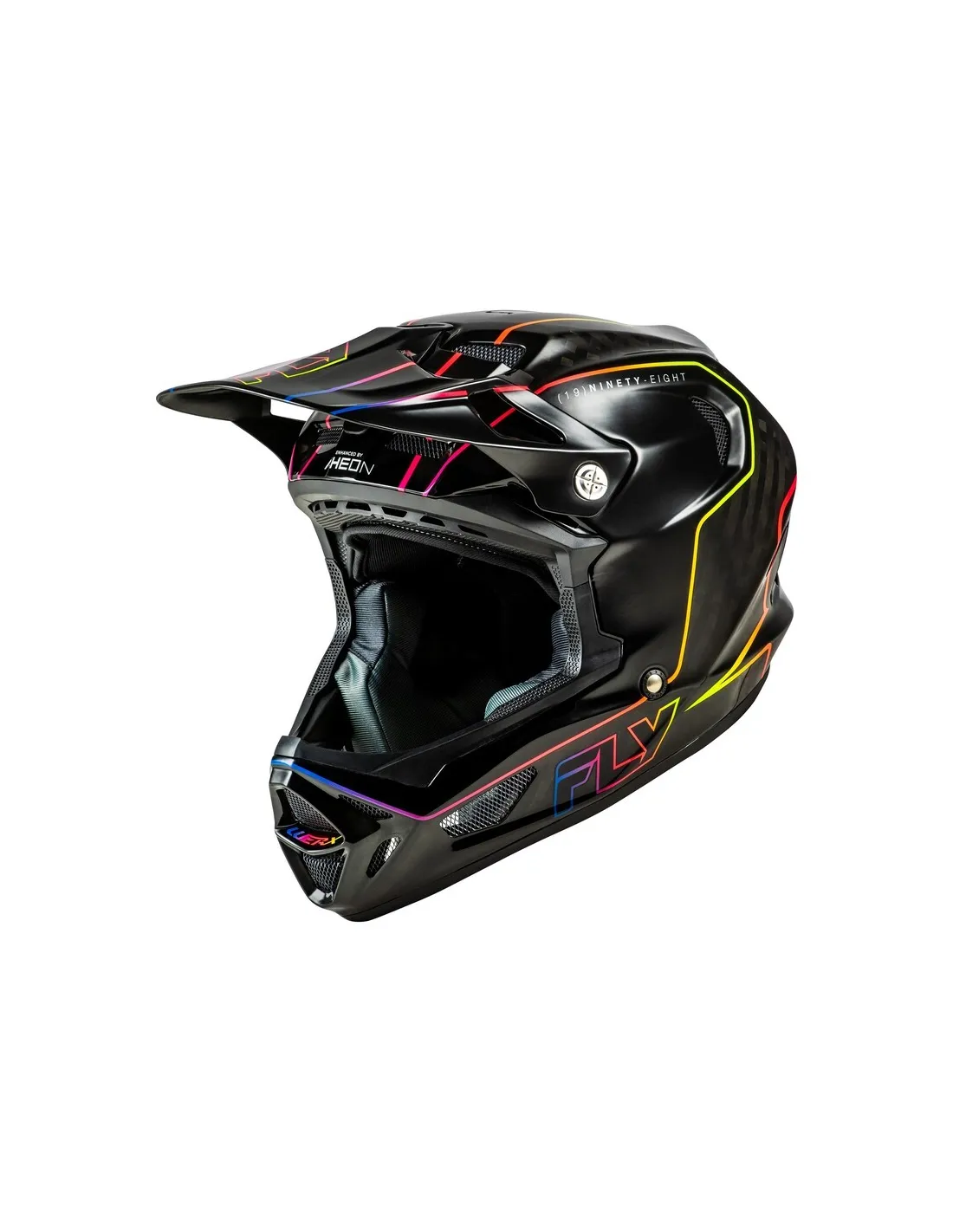
An open-face mountain bike helmet, a removable chin bar or a skate helmet will not be accepted at the gate. The fixed chin bar protects the face and jaw in a crash out of the gate or on a short landing, and the visor has to cover at least 10 cm. Watch what the marking actually certifies. EN 1078 (CE marking) certifies the shell but does not test the chin bar. For facial protection, look for ASTM F2032 as well, the standard specific to BMX, or ASTM F1952, the downhill mountain bike standard.
Measure head circumference about a centimetre above the eyebrows. And remember the rule that counts: a helmet that has taken a serious impact gets replaced, even if it looks intact, because the liner crushes once and does not come back. That is true of every full-face BMX helmet, whatever it cost.
Race clothing
Long sleeves and covered legs limit gravel rash. Long-sleeve BMX jerseys are cut close to the body so nothing catches on the bars, race pants are made from abrasion-resistant fabrics, and full-finger gloves keep the feel you need on the brake lever, something fingerless road gloves cannot give you.
The recommended protectors
The UCI explicitly recommends a back protector, elbow pads, knee pads, rigid shoulder pads and a neck brace. Elbow and knee pads are certified either to EN 14120, the roller-sports protector standard, or, at the gravity brands, rated to EN 1621-1, a motorcycle standard in level 1 or level 2. Back protectors fall under EN 1621-2 in full back (FB) or central back (CB) coverage, again a motorcycle standard. Level 2 absorbs more but stays thicker, and over a 35-second moto plenty of riders prefer a well-vented level 1. For a beginner, knee pads are the first worthwhile addition, together with grippy-soled shoes. Watch the size, because an oversized protector slides out of place and protects nothing.
What a BMX costs, part by part
The budget breaks down into four parts. Prices move too much from one season to the next to be fixed here, and ours are kept up to date on the pages themselves. See the complete builds for a new bike, the used bikes for a checked entry-level machine, and the protective gear section for the compulsory items. Count the licence and the club subscription separately, because only the club can price those.
The four parts
- The bike. The heaviest part, and the only one that varies enormously depending on frame, fork material and components. It is also where you can save the most.
- Rider kit. The five compulsory items, plus protectors. With a child this is the item that comes round most often, because they keep outgrowing it.
- Licence and club subscription. An annual figure covering membership, insurance and coaching.
- Travel. The one everyone underestimates. Multiply the return distance by the number of trips in a season, training included.
On top of that come consumables — tyres, inner tubes, brake pads, chain, rear cog — and the number plate with its racing number, compulsory in competition.
How to bring the bill down
- Start second-hand. A race BMX is a simple machine, with no derailleur, no suspension and few wear parts. Our used bikes are checked part by part before going back on sale, which removes the one real problem with private sales, knowing what you are buying.
- Let the bike grow with the rider. When a rider moves up a frame size, saddle, number plate, stem, bars and protectors usually carry over. Wheels are the exception. At the Expert XL to Pro step the rim standard changes from 451 to 406, so rim, tyre, tube and spokes all have to change, although the hub can be rebuilt onto a 406 rim.
- Separate training and racing. Two sets of tyres — wire-bead models, cheaper and tougher, for training, and folding tyres, lighter, kept for motos — plus two pairs of gloves. You race on fresh kit without doubling the bill.
- Do not buy carbon too early. While the rider is still growing, an aluminium frame (6061-T6, the standard BMX race alloy) with a carbon fork is the right compromise. A full carbon frame starts to make sense from Expert XL upwards.
- Use the club's loan bikes for the first few sessions.
What we fix most often on first-year bikes
Always the same five, and they cost more in lost progress than in money.
- The bike bought too big — the child cannot put a foot down at a standstill and rides with the arms locked out at the gate.
- Over-inflated tyres — less grip as the gate drops, and the bike bounces off the jumps.
- Badly set-up brakes — pads rubbing on the rim and a lever out of reach of small hands.
- Protection treated as an afterthought — being within the rules is not the same as being protected.
- Gearing that is too tall — the race is lost in the first ten metres.
1. The bike bought too big, "because they'll grow into it"
A frame that is too long stops a child putting a foot down on the gate, forces the arms straight at the start and prevents them lifting the chest over the jumps. They get scared, they stop learning, and they ride worse than they would on a used bike that actually fits. Take the top tube figure for the measured height, not the one after it.
2. Over-inflated tyres
Pumping tyres to the maximum to roll fast is a habit carried over from road riding, and it is counter-productive on dirt. A tyre that is too hard loses grip at the gate, slides in a berm and bounces off jumps instead of absorbing them. Stay inside the min/max range printed on the sidewall, lower on wet, greasy dirt and higher on a dry track. It is the highest-return adjustment there is, and it is free.
3. Badly set-up brakes
A race BMX has one brake, at the rear, and it needs to be powerful and progressive. Two faults keep coming back, pads permanently rubbing on the rim and a lever out of reach of a child's hands. On smaller riders, insist on a short-reach (junior) lever with adjustable reach, keep a spare set of pads, and have the whole braking system checked before the first race.
4. Protection treated as an afterthought
A rider wearing the strict regulatory minimum is compliant, not protected. Knees and elbows take most of the impact while learning, which is exactly the period when riders go down most. It is also a habit, and a child kitted out from the balance-bike stage never argues about the helmet.
5. Gearing that is too tall
Too tall a gear kills the start. The rider cannot get the bike moving as the gate drops and loses the race in the first ten metres. You can redo the maths at home.
- Gear inches = (chainring teeth ÷ rear cog teeth) × developed wheel diameter in inches
- Rollout in metres = gear inches × π × 0.0254
Take 44 teeth at the front and 16 at the rear. On a 451 rim with a 20 x 1-1/8" tyre, the wheel of the Micro to Expert XL sizes, that gives 55.0 gear inches and 4.39 m per crank revolution. On a 406 rim with a 20x1.75, the Pro wheel, the same drivetrain gives only 53.6 gear inches and 4.28 m. The wheel format counts for as much as the teeth. Fit a 17-tooth rear cog and you drop to 51.8 gear inches on a 451, roughly 6% less, and it is the cheapest change on the bike. For a beginner, slightly short gearing is better because it lets the rider accelerate. Every combination is set out in our BMX gear ratio chart.
Your first sessions, in the right order
A well-run club does not send a beginner down the big start hill on day one.
- The ready position. Standing, cranks level, knees and elbows bent, eyes well ahead. Everything else follows from it, so work on it on the flat, with no obstacles, until it becomes automatic.
- Braking and vision. Braking with control rather than locking up, and looking far ahead instead of at the front wheel, because a rider who looks ahead corrects their own lines.
- Jumps and absorption. Absorb first. Bend arms and legs on the face, extend them on the backside, so the wheels stay in contact with the ground. Then pumping, using the terrain to gain speed without pedalling.
- The berm. Enter high, exit low, carry speed, inside pedal up. It is the skill that saves the most time on a lap.
- The gate. Only then comes the gate itself, balancing with the wheel against it, front foot up and loaded, reacting to the cadence. Beginners start on a low hill.
- A full lap, then a moto. Linking a complete lap without stopping, first alone, then two or three abreast to learn to hold a line. Official motos come after that.
Where to start, concretely
In order: find a club through your national federation's directory, watch a training session, do two or three taster sessions on a loan bike, then measure the rider and buy to size. The compulsory kit is bought at the same time as the bike, because it is what gets you onto the track.
The first-purchase checklist
- The bike in the measured size, new or a checked used bike
- The full-face helmet, with its visor of at least 10 cm
- The long-sleeve jersey
- The long race pants
- The full-finger gloves
- The number plate and its racing number
- Knee pads, the first worthwhile addition, then the rest of the protective gear
The helmet and gloves are in BMX protective gear, the jerseys and race pants in the clothing section. It all starts with the measurement, because rider height gives the top tube figure and therefore the size of BMX race bike. Send us the rider's height and inside leg. As a multi-brand shop, we compare the real size charts from one manufacturer to the next, and half an inch of top tube between two bikes both badged "Expert" is exactly the sort of thing a single-brand chart hides. Dispatched within 24 to 72 hours, and you can spread the cost over 2 or 3 payments.
Frequently asked questions
What age can you start BMX racing?
From two or three years old on a balance bike at most clubs, and from around four or five on a pedal bike in the Micro size. There is no upper limit in the other direction, and an adult can start on a Pro or a Cruiser. The bike is chosen on rider height measured barefoot, not on age.
What is the difference between BMX racing and BMX freestyle?
BMX racing is a sprint discipline on a dirt track, with a start gate, jumps and berms. BMX freestyle is a trick discipline. The bikes differ, because a race bike is long, light and has a single rear brake, while a freestyle bike is short, heavy and runs pegs. A freestyle bike is not suitable on a race track.
How long is a BMX track?
A BMX race track measures 300 to 400 metres from the gate to the finish line, with three or four jump straights separated by berms. The start hill stands about 5 metres above ground on a standard track and up to 8 metres on the supercross tracks used for elite racing. A moto lasts around 35 seconds.
Do you need a licence to ride a BMX track?
For competition, yes. For riding, it depends. Most tracks are club-run and the start hill is only open during supervised sessions, but plenty of clubs run open ride nights you pay for on the day, and some federations sell a day licence for that. A full racing licence carries your insurance and is what lets you enter races. How you buy it varies, since British Cycling sells membership and a licence direct while other federations go through the club.
How do I find a BMX club near me?
Use the directory of affiliated clubs published by your national cycling federation — British Cycling, KNWU, Belgian Cycling, DCU, Svenska Cykelförbundet or the BDR — because it lists the clubs that are actually still running, which a search engine cannot guarantee. Pick out those within an acceptable travel radius, then call to ask about coached session times and prices.
What BMX racing equipment is compulsory?
Five items in competition. A full-face helmet with a fixed chin bar, a visor at least 10 cm deep (UCI 6.1.081), a long-sleeve jersey, long race pants and gloves covering every finger. Without them the rider does not start. EN 1078 certifies the shell of the helmet but not the chin bar, which is why an ASTM F2032 approval is worth looking for. Elbow pads, knee pads and a back protector are strongly advised.
How much does it cost to start BMX racing?
The budget splits into four parts: the bike, rider kit, licence plus club subscription, and travel. Prices move from season to season, so ours are kept up to date on the complete builds, used bikes and protective gear pages rather than in this article. Only the club can give you the exact licence and subscription total.
How long does a BMX moto last?
Around 35 seconds, depending on the track. A rider contests three qualifying motos, then possibly quarter-finals, a semi-final and the main event. Across a full race day that adds up to under three minutes of actual riding.